Want to try our resources? Sign up for our 14-Day Free Trial

Do stories bring us together?

5th - 10th October 2026

Back to results

61792

Total votes

1253

5-11 votes

49237

11-16+ votes

October is UK Black History Month. 2026 is also the National Year of Reading. So, for this year’s celebration, we are taking the opportunity to think about stories and their power to bring people together. Stories are often the bedrock of Black History Month activities in schools with teachers around the country sharing stories of remarkable Black Britons with their pupils. Often discussed as “cognitively privileged”, narratives are highly memorable and can be powerful tools in building empathy and improving representation in the classroom. Yet, society is becoming increasingly polarised with conflicting stories battling for attention; we are continually exposed to the power of stories to divide, blame and isolate. Which story do young people believe? Do they see stories as a tool for unity or as a driver of division?

61,792 young people voted on this topic with more participating in discussions around the country.

Voters of all ages debated, "Do stories bring us together?"

child

Age 5-11 voter

Stories can bring us together as we discuss and can understand each other, our cultures and feelings.

teen

Age 11-16 voter

Every story can bring us together as long as the story has been shared right. It depends upon who you share it with and the subject matter.

student

Age 11-16 voter

Students said it depends on what kind of story. If it's non fiction it may only relate to a specific group but if it's fiction then it doesn't relate to anyone.
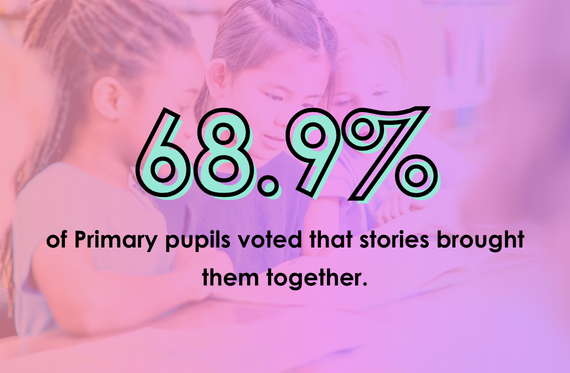
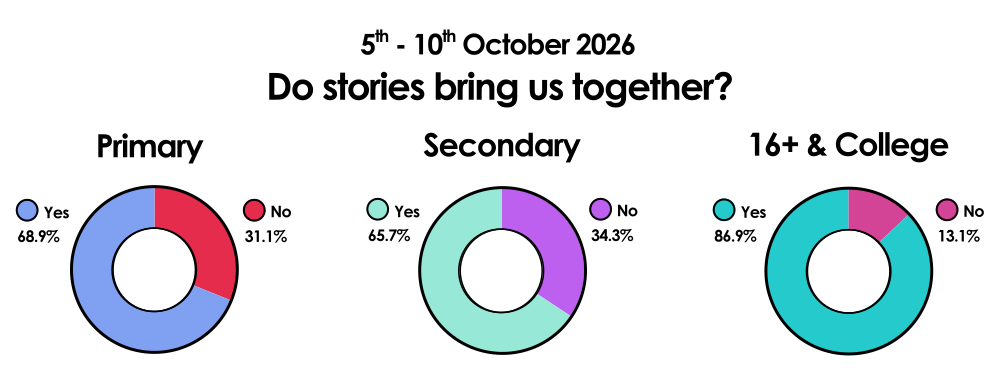
68.9% of Primary pupils voted that stories brought them together,

  • Primary voters argued that sharing stories was a powerful way to connect people and make new friends.
  • Many voters saw stories as a way to understand other people and their differences more thoroughly.
  • 'Yes' voters had a clear sense of stories as a powerful tool for learning.
  • 'No' voters argued that there were other things that were more powerful in uniting people, such as socialising or play.
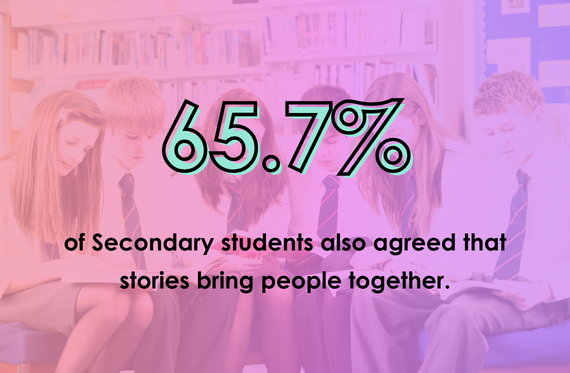
65.7% of Secondary students also agreed that storied bring people together.

  • Secondary discussions were more nuanced; many voters argued that it depends on the story and who is sharing it.
  • They agreed wth their Primary peers that stories are powerful ways of understanding another person's point of view.
  • Many voters also thought that stories featuring shared experiences could unite people effectively.
  • As in Primary, 'No' voters argued that other things can be more uniting than stories, especially fiction writing.
Voters of all ages thought stories helped them understand what other people more completely.

  • The potential for stories to reveal the thoughts and feelings of others was appreciated across all ages.
  • Some Secondary voters particularly valued personal stories as a means of connecting people.
  • Family was also a common theme, with voters using the sharing of stories to connect with family members and their family backgrounds.
results