Want to try our resources? Sign up for our 14-Day Free Trial

Does everyone get what consent means?

2nd - 6th November 2026

Back to results

59758

Total votes

10987

5-11 votes

48771

11-16+ votes

The topic of consent, unfortunately, recurs time and time again in the media. The weeks prior to and since this Votetopic have been no exception; celebrity abuse revelations now feel like standard fare in our newspaper headlines. But these are not the only cause for concern. A Guardian investigation in October revealed almost 5 sexual offences against under-13s taking place on or near school premises are reported to police every day. Child-on-child abuse accounts for 52% of all child sexual abuse and exploitation offences recorded in England and Wales. Could young people’s understanding of consent help to explain these worrying figures? We asked our voters to consider their own understanding of consent and whether they think everyone shared that same idea.

59,758 young people voted on this VoteTopic with more participating in discussions around the country.

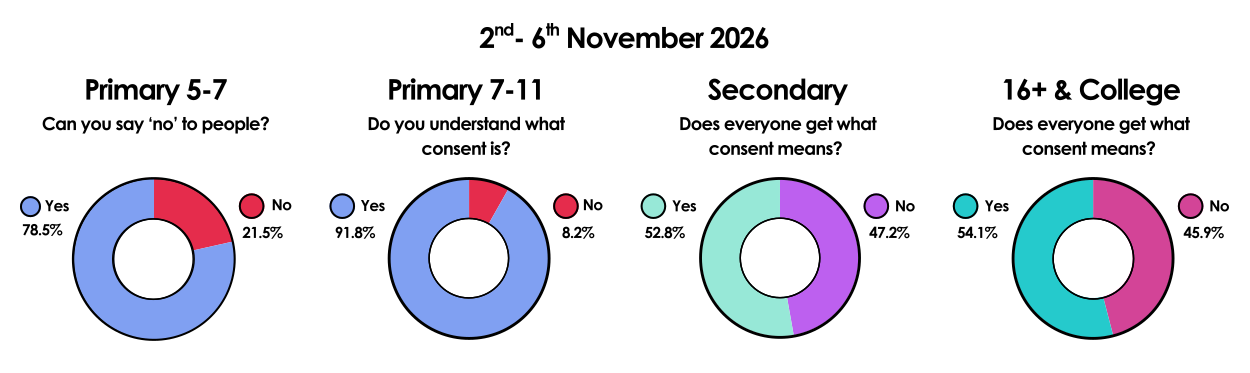
5-7-year olds were asked, "Can you say 'no' to people?"

7-11-year olds debated, "Do you understand what consent is?"

Secondary 11-16, 16+ & College disucussed, "Does everyone get what consent means?"

Age 5-11 voter

Consent means permission you must give your permission before anyone touches you.

Age 11-16 voter

People might understand the principle of consent but learning about it in a safe classroom is very different to recognising it and respecting it in real life situations.

Age 11-16 voter

Whilst we feel comfortable knowing what consent means, others in our community don't always show they understand consent.
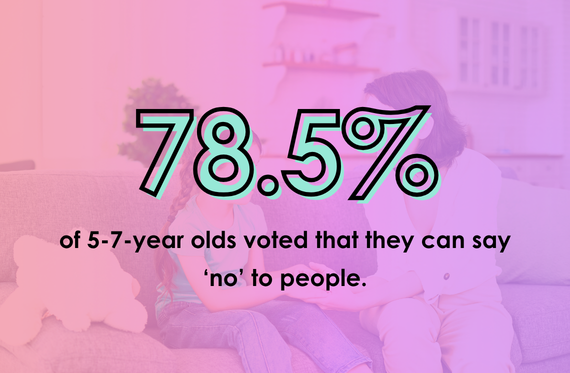
81% of 11-16-year olds voted 'No' to the question, "Is the influence of looksmaxxing a good thing?"

  • Pupils were confident in advocating for themselves when they felt uncomfortable or if they did not want something.
  • They were confident in saying no to protect their own personal space and saw it as important to respect other people's physial boundaries.
  • 1-in-4 children were not confident, saying that having to say no made them uncomfortable and that they didn't want to make the other person sad.
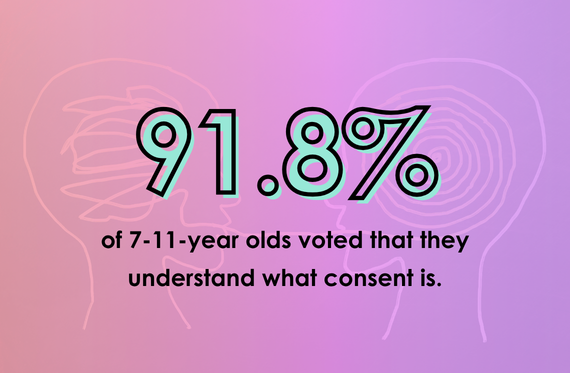
91.8% of 7-11-year olds voted that they understand what consent is.

  • 7-11-year olds voted overwhelmingly that they understood consent.
  • Most voters understood it as relating to bodies and personal space.
  • Many saw consent as asking for or giving permission.
  • While consent was seen as a verbal yes or no by some, other understood the role body language could play in communicating it, such as how a yes given in a shaking voice was in actuality a no.
  • Although a small minority, some voters were less certain about consent, arguing that it is sometimes difficult to know for sure or that they did not know enough about the concept.
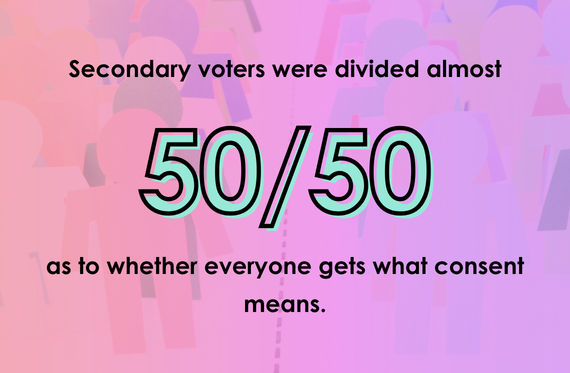
Secondary voters were divided almost 50/50 as to whether everyone gets what consent means.

  • 52.8 % of Secondary and 54.1% of 16+ & College students voted that everyone gets what consent means.
  • Most Secondary & College voters thought that they had a good understanding of consent but that other people did not.
  • There was much conversation about how consent, while simple in principle, could often be confusing in practice.
  • Others thought that there were still plenty of bad actors in the world who would actively ignore consent despite understanding it; if everyone got what consent was, sexual crimes would not still be committed.
  • Some wanted to learn more about consent and thought it should be taught from early Primary school.
results