Want to try our resources? Sign up for our 14-Day Free Trial

Do school dinners need to change?

21st - 28th September 2026

Back to results

68972

Total votes

13180

5-11 votes

55792

11-16+ votes

This month, the UK government unveiled their new food standards for schools across the UK. With one-in-three children leaving primary school overweight or obese and tooth decay being the leading cause of hospital admissions for 5-9-year olds, these “once-in-a-generation changes” aim to improve the health of the nation’s children through improved nutrition in school dinners. Wholegrains, fruits and vegetables are now the order of the day, with high sugar and fat content foods being restricted or removed entirely. Developed alongside nutritionists and public health experts, the new school food standards are backed by campaigners, charities and nutritional experts. But are they backed by those who will be on the receiving end? We asked our voters where they stood on the planned revamp of canteens and cafeterias nationwide.

Almost 70,000 young people voted on this topic, with more participating in discussions across the country.

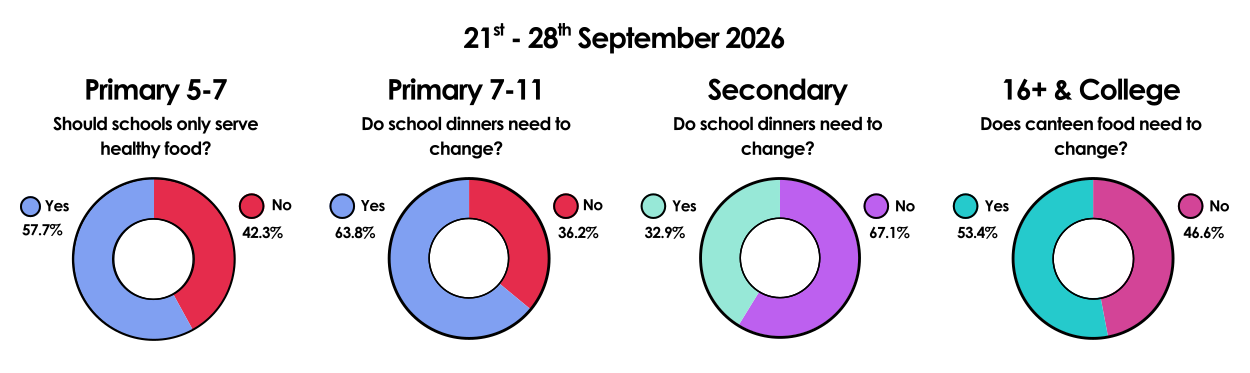
Primary 5-7-year olds were asked, "Should schools serve only healthy food?"

Primary 7-11 and Secondary were asked, "Do school dinners need to change?"

16+ & College were asked, "Does canteen food need to change?"

child

5-11 voter

I think School dinners should change to give children a chance to choose what they have, but they should be educated about balanced diets so they can make good choices.

teen

11-16 voter

Some changes are needed but not the extreme measures suggested. We agree less salt and more healthy options. Cost needs to be a consideration.

student

11-16 voter

There is already plenty of vegetables but students don't buy them. I wouldn't mind less processed meat and no deep frying, this might improve quality. But basics like bread shouldn't be changed.
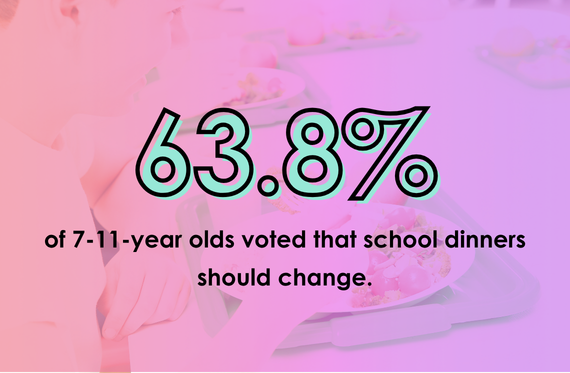
63.8% of 7-11-year olds voted that school dinners should change.

  • 57.7% of 5-7-year olds voted that schools should only serve healthy food.
  • Many voters stressed the importance of eating healthily in terms of both healthy growth and dental health.
  • Some pupils found their current meals repetitive and wanted more variety.
  • Lots also though their current dinners were already healthy and so did not need changing.
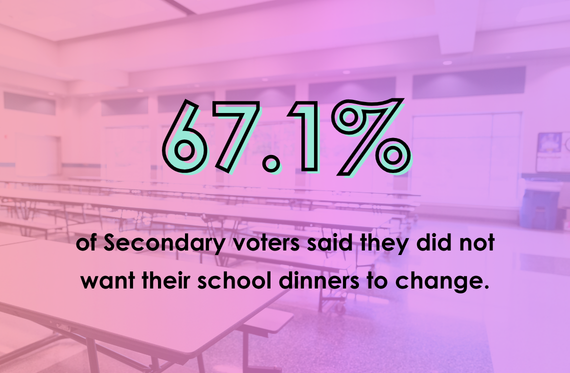
67.1% of Secondary voters said they did not want their school dinners to change.

  • There was energetic and varied debate at Secondary level.
  • Some students were happy with their current offering but many wanted to see change.
  • The "No" majority is possibly due to students disagreeing with the government's intended changes, and wanting different changes implemented.
Many voters were against the government's planned changes. Cost and variety were the main improvements they wanted to see.

  • The most common complaints about school lunches were the high cost and poor variety.
  • Students also thought that portion sizes were too small.
  • Many wanted the taste and quality of their school food to be improved.
  • Health and nutrition were not considered top priorities.
Some voters did accept the importance of healthy food in school but wanted balance with some unhealthy food occasionally allowed in moderation.

  • Some voters across all age groups appreciated the need for healthy food choices but stressed the importance of balance.
  • Many thought the government's planned changes were too extreme.
  • Lots argued that some unhealthy food in moderation was acceptable.
  • The idea of a treat day on Fridays was frequently suggested.
results