5-11 votes
11-16+ votes
Total votes
June 2026 saw the release of Meta's latest smart glasses. Featuring speakers, camera, processor and microphone, they let users take photos and video hands-free and interact with an AI assistant in real-time based on the glasses’ visual feed. Meta’s top-of-the-range model even has an in-built display, allowing users to view messages and other content entirely through the glasses. Mark Zuckerberg sees a future where these glasses have replaced smartphones, as they have all the same benefits while allowing users to be present in the moment. Supporters also see them as game-changing for Disabled people’s independence. Not everyone agrees. Critics have major privacy concerns about the on-board camera allowing users to film others without their knowledge; there have already been reports of people covertly filmed in public for social media content. Though the glasses have an LED that blinks during any filming, sceptics say it is not reliable and often hard to see. So, through which lens do the always-online generation see smart glasses?
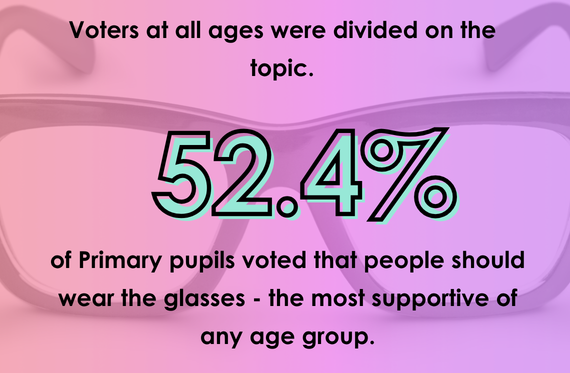
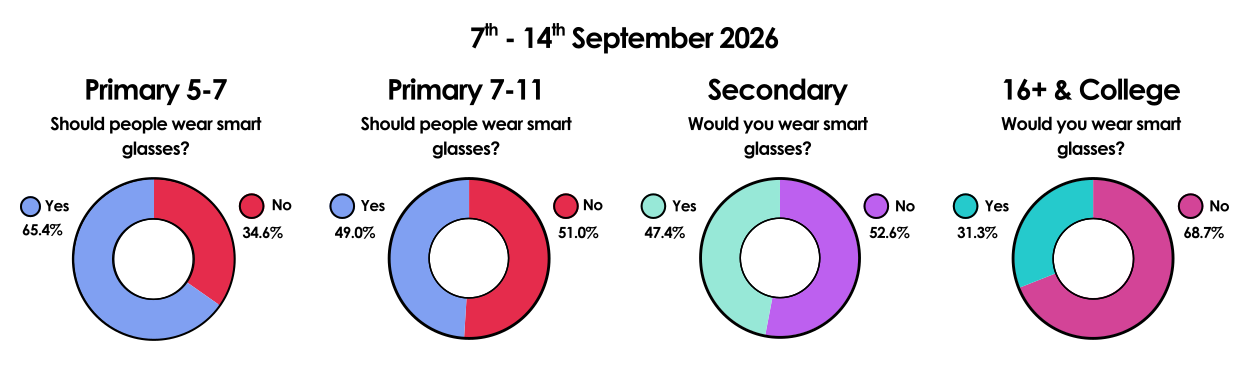
Primary voters 5-11 were asked, "Should people wear smart glasses?"
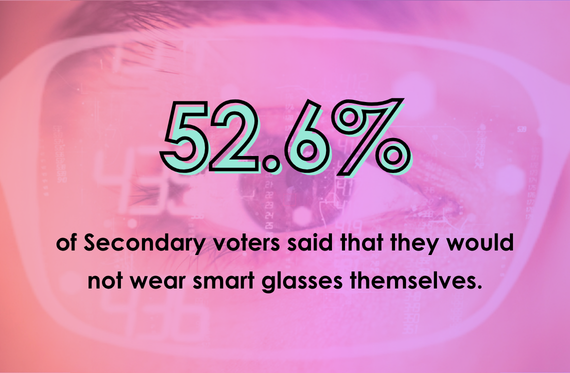
Secondary, 16+ & College voters debated, "Would you wear smart glasses?"
58,767 young people took part in this vote, with more participating in classroom discussions across the country.

Yes but I think they should add more rules to make them safer and make people more aware of smart glasses.

We did like translation and helping Disabled people [...] We believe that they should be used for people who genuinely need this sort of help.

While we can see the benefits of smart glasses for impaired people, we can also see the dangers for people being filmed in the street, in public places and in private situations where they should be able to rely on confidentiality.