


Support the Prevent duty through regular, informed discussion

VotesforSchools gives pupils regular opportunities to explore topical and sometimes controversial issues, think critically about the information they encounter and reach their own informed opinions.
Every weekly VoteTopic is mapped against relevant Prevent criteria, with clear curriculum guidance to help schools build and evidence their provision across the year.
Start TrialYoung people encounter complex ideas and opinions at school, at home, in the news and online. VotesforSchools gives teachers a structured way to bring these conversations into the classroom.
Weekly VoteTopics explore real-life issues such as misinformation, discrimination, online influence, conflict, politics, crime and extremism. Pupils are given the context to understand an issue, consider different viewpoints and discuss their ideas respectfully.
Regular discussion helps pupils develop the confidence to ask questions, challenge assumptions and recognise that the information and opinions they encounter should not always be accepted at face value.

Pupils consider where information has come from, examine the evidence behind different arguments and develop their ability to recognise misinformation.

VoteTopics introduce pupils to views and experiences beyond their own, helping them understand why people may think differently and how to disagree respectfully.

Structured activities provide a safe space for pupils to explore topical and controversial issues with increasing confidence.

Every VoteTopic ends with a vote, giving pupils the opportunity to reflect on what they have learnt and reach their own conclusion.

Social media, influencers, algorithms and online communities expose young people to a huge range of information and opinions.
VoteTopics regularly explore online influence, misinformation, digital behaviour and other issues affecting pupils' lives. Through discussion, pupils learn to look beyond a headline or post, consider the reliability of information and recognise how different messages can influence people's opinions and behaviour.
These skills are revisited through different VoteTopics across the year, making critical thinking part of regular classroom practice.

The conversations pupils are ready to have change as they grow. VotesforSchools provides age-appropriate resources that allow the underlying skills to develop over time.
Younger pupils explore ideas such as fairness, rules, respect, belonging, safe adults and recognising right and wrong.
As pupils grow, VoteTopics introduce increasingly complex issues including discrimination, misinformation, online influence, politics and conflict.
Older pupils can explore challenging questions around extremism, radicalisation and controversial political or social issues in greater depth, using evidence and different perspectives to reach informed conclusions.
This gives schools a consistent approach while keeping discussions appropriate to pupils' age and stage.
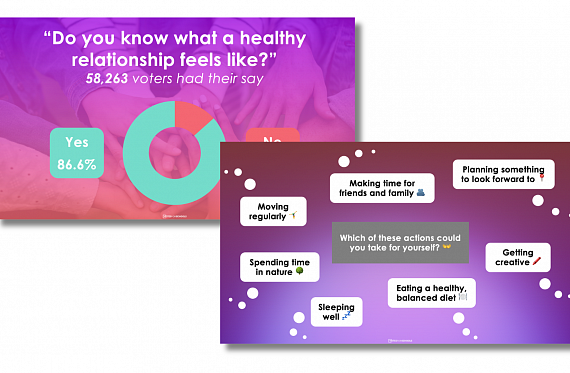
VotesforSchools gives teachers the research, structure and activities needed to approach challenging topics in the classroom.
Resources provide appropriate context, present different viewpoints and encourage pupils to question misconceptions and problematic views. Our Education Team uses trusted sources and, where appropriate, works with external organisations and subject specialists to support the accuracy and quality of lessons.
Resources are also designed to support schools' responsibilities around political impartiality, helping pupils consider different perspectives without being told what to think.
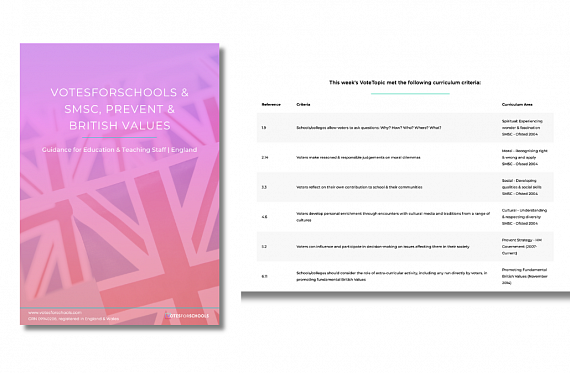
Every VotePack includes curriculum mapping which outlines the relevant Prevent criteria addressed that week.
Schools also receive:
Together, these provide a clear record of how individual VoteTopics and the wider VotesforSchools programme have contributed to your Prevent provision throughout the academic year.
In alignment with the Prevent duty, regular VoteTopics give pupils the opportunity to explore real-life issues, consider different perspectives and practise the critical-thinking skills that support Prevent.
With age-appropriate resources and clear curriculum mapping, VotesforSchools helps make these conversations part of regular classroom practice.