


Why Are People Talking About LGBT+ Rights?
Every June, schools across the UK mark Pride Month in different ways. Some run assemblies, some take part in awareness events and others use it as an opportunity to discuss rights, equality and inclusion. This year, there's another conversation taking place alongside Pride Month and School Diversity Week, organised by Just Like Us.
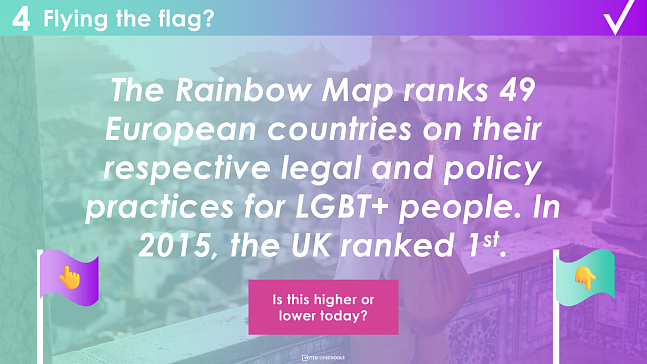
The UK has fallen to 22nd place in Europe's Rainbow Map rankings for LGBT+ rights, prompting debate about how far equality has come and whether progress has stalled. For many adults, the ranking came as a surprise. For students, however, it raises an interesting question: do we value LGBT+ rights?
Produced each year by ILGA-Europe, the Rainbow Map compares countries based on the laws, protections and policies in place for LGBT+ people. Countries with higher scores tend to have stronger legal protections and more comprehensive equality measures, while countries lower down the rankings often have fewer safeguards in place. The UK's position has led to discussion about what equality looks like in practice and whether rights can ever be taken for granted.
What Are LGBT+ Rights?
When people talk about LGBT+ rights, they are often referring to the legal protections and freedoms that help ensure LGBT+ people are treated fairly and equally. In the UK, many of these protections are found within the Equality Act (2010), which protects people from discrimination based on a number of protected characteristics, including sexual orientation and gender reassignment.
Understanding these protections can help students explore wider themes of fairness, discrimination and human rights. It also encourages them to consider how different people experience life in different ways and why rights can look different depending on where you live.
These conversations have become increasingly relevant as schools prepare for the updated Relationships, Sex and Health Education (RSHE) guidance, which comes into effect from September. The guidance continues to emphasise respectful relationships, understanding difference and ensuring that learning is delivered in an age-appropriate way.
Why Does This Matter in Schools?
Discussions about LGBT+ rights are not separate from the curriculum. They sit naturally alongside Personal Development, PSHE, RSHE, British Values and wider work around equality and inclusion. For schools working towards the Rights Respecting Schools Award, this week's topic also provides an opportunity to explore how rights apply to different groups within society and why legal protections exist in the first place.
Similarly, in Wales, discussions about rights, diversity and equality align closely with the Curriculum for Wales' cross-cutting themes of human rights, diversity and Relationships & Sexuality Education. Rather than focusing solely on facts, these conversations encourage learners to ask questions, consider different perspectives and develop informed opinions.
At VotesforSchools, we believe young people should have opportunities to explore complex issues through discussion and debate. The aim isn't to tell students what to think. Instead, it's about creating space for them to engage with different viewpoints, think critically and develop their own informed opinions.
Looking for a Way to Introduce the Topic?
One challenge teachers often face is knowing where to begin. Many pupils will already be familiar with some LGBT+ terminology through social media, television, sport and the wider world, while others may be hearing certain terms for the first time. Creating a shared understanding can help ensure discussions remain respectful, informed and accessible to everyone.
That's why we've created a free ABCs of LGBT+ Assembly, which introduces key terminology and helps students understand the diversity of identities and experiences within the LGBT+ community. Whether you're marking Pride Month, taking part in School Diversity Week or introducing wider discussions about equality and rights, it can provide a useful starting point for classroom conversations.
This Week's Classroom Debate
This week's VoteTopic asks students a simple but thought-provoking question: Do we value LGBT+ rights?
For younger pupils, the discussion begins with rights, fairness and why it is important to learn about everyone's rights. For older students, the lesson explores Pride Month, the Rainbow Map rankings and the UK's changing position in Europe before asking whether LGBT+ rights are valued enough in modern society.
As always, the goal isn't to provide a "correct" answer. It's to help students think critically, discuss respectfully and have their say.
If you're looking for ready-made resources to support Pride Month, School Diversity Week, RSHE, Personal Development or Rights Respecting Schools work, start with our free ABCs of LGBT+ Assembly. If you'd like to explore the topic in greater depth, you can also start a 14-day free trial and access this week's LGBT+ Rights lessons, assemblies and hundreds of discussion-based resources covering the issues young people are talking about today.
Can't see the form? Click here to start your trial!
Can't see the form above? Click here to start your trial!