


Looks can be deceiving.
If you work with young people, you may have heard the term looksmaxxing in conversations about TikTok, gym culture, skincare, “glow-ups”, or online masculinity. In simple terms, it means trying to make yourself more attractive by improving your appearance looksmaxxing.
That might sound fairly ordinary at first. After all, there is nothing unusual about wanting to look nice, feel confident, or take care of yourself. The problem is that looksmaxxing is not just about a haircut, a cleanser, or spending more time at the gym. Online, it can quickly slide into something more intense, where appearance is treated like a competition and self-worth starts to get tied to jawlines, symmetry, status, and the idea of becoming the “best” version of yourself.
That is one reason the trend has started getting more attention. Recent reporting, including in the BBC and The Guardian, has highlighted concerns about looksmaxxing content aimed at boys and young men, and the way some of it overlaps with more extreme corners of the manosphere. That does not mean every young person using the word is heading somewhere dark. It does mean schools are right to pay attention.
- What does looksmaxxing actually involve?
- Why does it matter in schools?
- Is looksmaxxing always harmful?
- What should teachers look out for?
- How can teachers respond?
- What should schools be saying instead?
- So, what is looksmaxxing?
- Want to explore this with your students?
What does looksmaxxing actually involve?
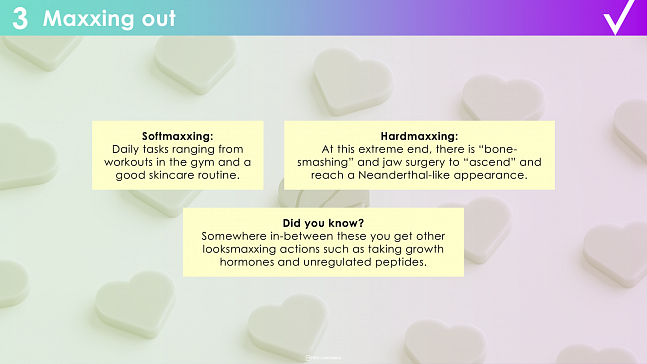
At the softer end, looksmaxxing can mean fairly familiar things: skincare, grooming, fitness, style, or trying to look more polished. That is partly why it can be hard to talk about. Some of it overlaps with everyday self-presentation.
At the other end, though, it can involve rigid appearance rules, harmful comparisons, unproven advice, and the message that how you look determines how much respect, attention, or success you deserve. That is where a trend about “improving yourself” starts to become something else.
For teachers, the key point is not memorising every bit of internet slang. It is recognising the mindset underneath it. When young people start talking as though their face or body is something to optimise at all costs, that is worth noticing.
Why does it matter in schools?
Because schools are already dealing with the wider issues around it.
Body image can have a real effect on how young people think and feel about themselves. YoungMinds says those feelings can be shaped by social media, advertising, celebrities, and peer pressure. The Children’s Society also links body image with well-being, confidence, and self-esteem, and notes that media and comparison can influence what young people think a “normal” body should look like.
That is why looksmaxxing matters. It takes pressures schools already know are there and gives them a new language, one that can make unhealthy ideas sound almost sensible. A student may not say, “I’m struggling with body image.” They may say they need to “improve”, “ascend”, or stop “wasting their potential”.
Is looksmaxxing always harmful?
Not always, and that is part of what makes it tricky.
A teenager taking pride in their appearance is not new. Nor is it automatically unhealthy. But there is a difference between enjoying style or self-care and becoming convinced that you are never quite good enough as you are.
That is where adults need to tread carefully. If we treat every interest in appearance as ridiculous or dangerous, we risk missing what is actually going on. Often, what sits underneath these trends is insecurity, comparison, and a very ordinary desire to feel accepted.
A better question is not “Is this trend good or bad?” but “What is this trend asking young people to believe about themselves?”
What should teachers look out for?
You do not need to panic every time a student mentions looksmaxxing. But it may be worth taking a closer look if a young person seems:
- preoccupied with flaws in their appearance
- anxious about photos, angles, or being seen without looking “right”
- drawn to extreme advice or rigid routines
- overly focused on status, attractiveness, or “high-value” language
- stuck in constant comparison with others
The issue is usually less about one word and more about the pattern around it.
How can teachers respond?
Start with curiosity, not horror.
Young people are much more likely to open up if they feel an adult is interested rather than instantly dismissive. That does not mean approving of harmful ideas. It means creating space to question them properly.
You could ask:
- What do people mean when they use that word?
- Why do you think this content is popular?
- Who benefits from making people feel they need to look better?
- What is the difference between self-care and pressure?
- How do we know whether online advice is trustworthy?
This is where Kidscape’s advice on teaching body positivity is useful. It encourages adults to challenge appearance-based assumptions and help children value themselves for more than how they look.
What should schools be saying instead?
Probably something simpler, and steadier.
Young people do not need another lecture about vanity. They need adults who can cut through the noise and remind them that:
- appearance is not the same as worth
- not all online advice deserves trust
- self-care should not leave you feeling worse about yourself
- confidence built on comparison is usually fragile
- people deserve respect whether or not they fit a trend
That sits naturally within PSHE, especially around body image, self-concept, and media literacy and digital resilience. VotesforSchools’ own PSHE guidance includes those areas as relevant learning opportunities for schools.
So, what is looksmaxxing?
Looksmaxxing is an online trend about improving appearance, but it is also about much more than appearance. At its mildest, it can overlap with ordinary self-care. At its worst, it can feed insecurity, unrealistic standards, and the idea that looking better is the route to being valued.
That is why teachers do not need to know every piece of slang to respond well. They just need to recognise the pressure behind it, and help young people question what they are being told.
Want to explore this with your students?
VotesforSchools has a lesson on looksmaxxing for ages 11 to 16, designed to help students discuss appearance pressure, online influence, and self-worth in a balanced, thoughtful way.