Total votes
5-11 votes
11-16+ votes
Cambridge Dictionary chose “parasocial” as their word of the year for 2025, to reflect the rising trend of one-sided or technology-based relationships. It can be defined as, “a connection that someone feels between themselves and a famous person they do not know, a character in a book, film, TV series, etc.” Taylor Swift’s engagement, Lily Allen’s new album and, more recently, relationships developed with AI have been cited as examples of parasocial activity. The term isn’t new, having been coined in 1956; people have felt strong one-sided connections with celebrities for a long time. However, with the rise of social media, AI technology and behind-the-curtain glimpses into celebrities’ lives, it has become a much more prevalent phenomenon in recent years. We wanted to see how young people felt about these relationships, and whether we can foresee them as the new normal.
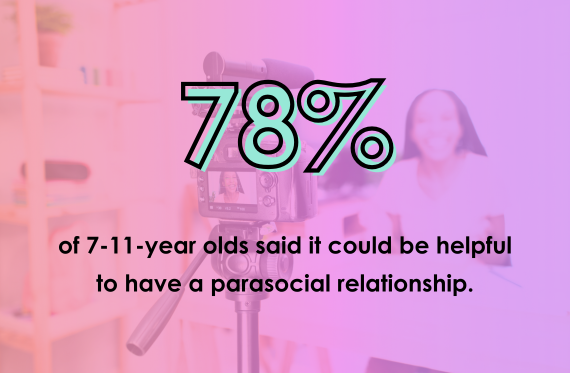
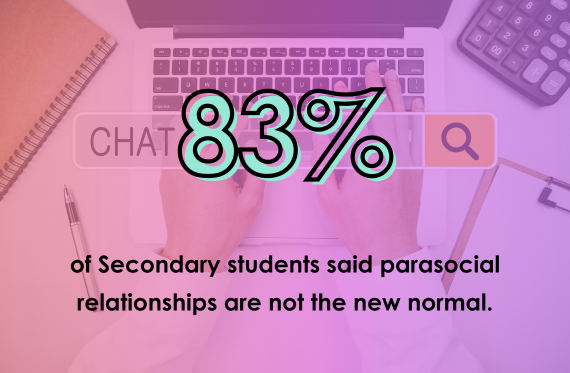
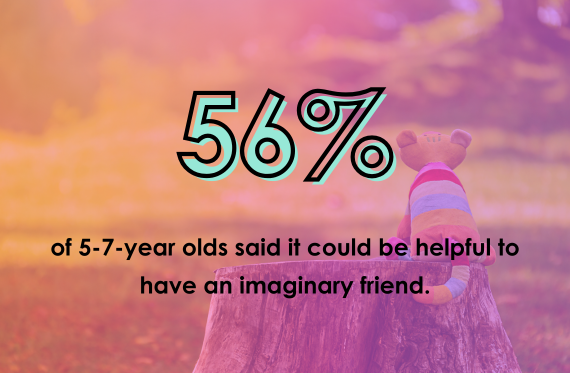
Secondary, 16+ & College voters were asked: “Are parasocial relationships the new normal?”, while Primary 7-11 voters discussed: “Can parasocial relationships be helpful?”, and Primary 5-9 voters considered: “Are imaginary friends helpful?”
47,856 young people in the UK have taken part in this vote.

Yes because it’s the same as having a role model. It gives me something to aspire to.

It’s becoming more common, but that doesn’t mean it should be normal — real-life relationships are what matter most.

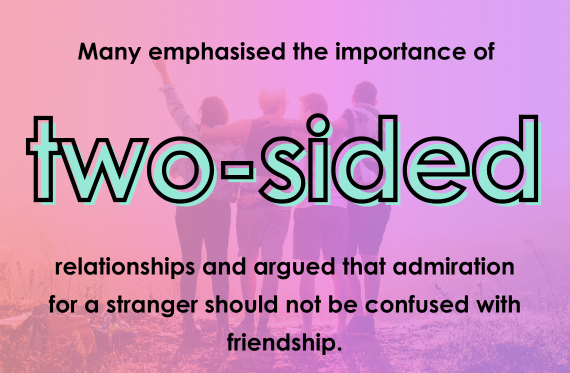
I think it’s normal now, but I don’t think it will replace two-way relationships — it’s more about looking up to idols.
Thank you to The Wellbeing Hub from Teen Tips, Sex Education Forum and The Belonging Forum for responding to young people's votes on this topic!
Kim Samuel, Founder and Chief Architect of the Belonging Forum, said:
“There are many people, real and fictional, who can inspire us and model kindness, courage, and responsibility. Superheroes, for example, often represent the values that help create safer, friendlier societies and a better world. The right parasocial relationships can therefore inspire us and help teach us how to be better people.
But it’s important to think carefully about who we look up to and whether they are spreading messages that help us connect with others. When you engage with people online, in games, or through stories, it’s worth asking yourself how friends and family would feel if you acted that way.
At the Belonging Forum, we agree with you and research and take action on what truly creates belonging, because nothing replaces real-life friendships and open conversations.”