


Looking for protected characteristics resources?
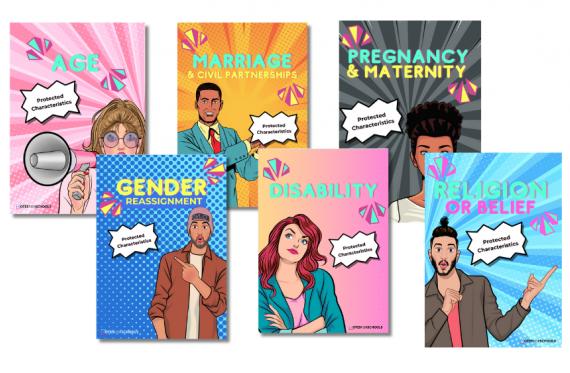
Display Posters & Definitions
We've created 9 posters and definition cards for you to display in your school, completely free to download.
Download Display Pack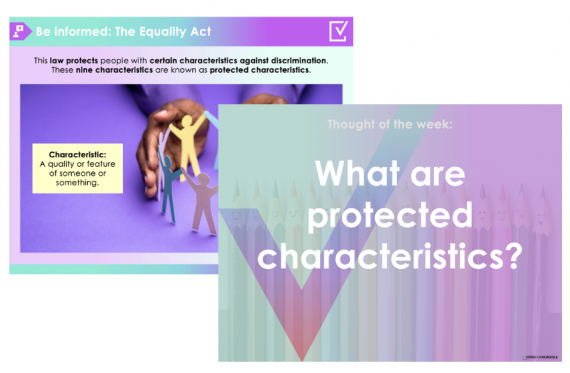
Lesson Pack
If you're looking for an assembly or lesson to teach, you can access our Protected Characteristics Lesson Pack here.
Download NowPSHE, British Values, SLT, P4C, VfS, Personal Development, RSE... the list of specialist vocabulary in education is vast, and if you're new to the classroom it can be easy to feel overwhelmed.
.
It can also feel like new terms are appearing all the time, and until a staff meeting is called to explain the latest word on the block, you might end up wondering, what on earth are protected characteristics and what do I need to do about them? You wouldn't be alone.
.
That's why we've created this go-to guide to help you and your school get up to speed on protected characteristics. We'll break it down and make it easier to understand and implement in your curriculum.
.
So, where do protected characteristics come from? The term Protected Characteristics was introduced in the Equality Act 2010. This Act defined nine specific characteristics that are protected from discrimination. It is the result of years of campaigning by organisations such as trade unions and equality and human rights NGOs.
.
Now, let's look at the detail. There are nine protected characteristics: age, disability, gender reassignment, marriage and civil partnership, pregnancy and maternity, race, religion or belief, sex, and sexual orientation. As an educator, you have a legal obligation to promote equality and tackle discrimination based on these characteristics. It is essential to ensure that all students have equal access to opportunities and resources, regardless of their background or identity.
.
To get a more detailed understanding of each protected characteristic and how it can impact a student's experience in education, see below.
The nine protected characteristics
The nine protected characteristics
Age
Discrimination based on age is unlawful, and everyone should be treated equitably, regardless of age.
Younger students may be seen as immature or inexperienced, while older students may be viewed as more mature or responsible. Additionally, during adolescence, students may experience hormonal changes that can affect their physical and emotional wellbeing, such as puberty or menstruation. These stereotypes can lead to discrimination, negative assumptions, or exclusion from certain activities or opportunities.
.
Disability
Reasonable adjustments must be made to provide equal opportunities for students with disabilities.
Disabled students may face physical and attitudinal barriers that prevent them from accessing education, such as inaccessible buildings, lack of assistive technology or support, or negative attitudes from peers and staff. Disability discrimination can limit students' opportunities and undermine their potential.
.
Gender Reassignment
Discrimination against transgender individuals is illegal, and they must be treated with dignity and respect.
Students who are transitioning may face harassment, bullying, and discrimination from peers and staff who are not supportive of their gender identity. This can lead to poor mental health, social isolation, and academic difficulties.
.
Marriage and Civil Partnership
Married and civil partnered individuals must not face discrimination.
Students with parents or carers who are married or in a civil partnership may face assumptions and stereotypes about their family structure or their ability to focus on education. Similarly, students with divorced or separated parents may face stigma or negative stereotyping that impacts self-esteem and wellbeing. Students with same-sex or LGBTQ+ parents may also face discrimination or exclusion based on family structure. It is important to create a welcoming and inclusive learning environment that respects and celebrates diversity in all its forms.
.
Pregnancy & Maternity
Discrimination against pregnant individuals or those on maternity leave is illegal.
Pregnant or parenting students may face negative attitudes and stereotypes from peers and staff, such as assumptions that they are less committed to their education or unable to succeed academically while caring for a child. This can lead to social isolation, academic difficulties, and discrimination.
.
Race
Discrimination based on race or ethnicity is illegal, and everyone should be treated equitably.
Students from ethnic minority backgrounds may face racism, discrimination, and negative stereotyping from peers and staff. This can affect self-esteem, sense of belonging, academic performance, and access to opportunities.
.
Religion or Belief
Discrimination based on religion or belief is illegal, and individuals' beliefs must be respected.
Students from different religious or belief backgrounds may face discrimination, bullying, or negative stereotyping based on their beliefs. This can lead to social isolation, conflict, and exclusion from certain activities or opportunities.
.
Sex
Discrimination against men, women, and non-binary individuals is illegal.
Students may face sexism, gender stereotyping, and harassment based on their sex or gender identity. This can affect self-esteem, mental health, academic performance, and future opportunities.
.
Sexual Orientation
Discrimination based on sexual orientation is illegal, including discrimination against individuals who identify as gay, lesbian, bisexual, or any other sexual orientation.
Students who identify as LGBTQ+ may face homophobia, biphobia, or transphobia from peers and staff, as well as discrimination or exclusion from certain activities or opportunities. This can lead to social isolation, mental health challenges, and academic difficulties.
What are schools' responsibilities for protected characteristics?
.
Schools have a legal obligation to promote equality and tackle discrimination based on the nine protected characteristics outlined in the Equality Act 2010. This means taking active steps to ensure that all students are treated fairly and have equal access to opportunities and resources, regardless of their age, disability, gender reassignment, marriage and civil partnership, pregnancy and maternity, race, religion or belief, sex, or sexual orientation. The following 7 steps can help ensure that your school has it covered.
Step 1 of 7
Staff training and development
By providing staff training and development on protected characteristics, unconscious bias, and inclusive practices, you can create a more aware and knowledgeable school community. This can lead to more inclusive teaching practices and a greater sense of belonging for all students.
Step 2 of 7
Curriculum design and delivery
Designing and delivering an inclusive curriculum is key to making all students feel seen, valued, and engaged in their learning journey. In 2020, VotesforSchools asked 7 to 18-year-olds if they felt that the curriculum was representative of themselves. More than 30,000 children responded, with the majority answering "no" — the curriculum was not diverse or representative. After these results, one of our subscribed schools told us they had made a conscious effort to incorporate diverse perspectives and experiences into their lessons. For instance, when teaching history, they explored the contributions of individuals from different races and backgrounds, shedding light on often overlooked narratives. They also sought feedback from students to ensure the curriculum reflected their identities and cultures, fostering a stronger sense of belonging.
Step 3 of 7
Inclusive policies and procedures
Developing and implementing policies and procedures that are inclusive and promote equality for all students helps create a safer and more welcoming school environment. This can include policies on bullying, harassment, and discrimination, as well as policies that support students who may require additional accommodations or adjustments.
Step 4 of 7
Support for students who experience discrimination or inequality
Providing support systems for students who experience discrimination or inequality based on protected characteristics is crucial. In a previous school I worked in, we implemented various measures to empower and support these students. We established a counselling service where students could confidentially discuss their experiences and receive guidance. Peer support programmes, such as mentoring initiatives, allowed students to connect with older students who had faced similar challenges and could provide guidance and encouragement. By creating a supportive network, we helped students navigate and overcome the obstacles they encountered due to their protected characteristics.
We also organised awareness campaigns and assemblies to educate the entire student body about the importance of empathy, respect, and inclusivity. These initiatives fostered a culture of understanding and support, making it clear that discrimination or inequality based on protected characteristics would not be tolerated.
Step 5 of 7
Creating a positive school culture that values diversity and inclusion
Promoting a positive school culture that values diversity and inclusion helps create a sense of community and belonging for all students. The ways to do this are numerous — from culture days, where students can showcase their individual cultures and values, to organising workshops and discussions on stereotypes and biases. Here are some ideas:
- Celebrate a range of awareness days — particularly those that explore the protected characteristics.
- Host your own culture day where students can showcase their own culture.
- Peer mentoring initiatives, where older students guide and support younger students, can help foster positive relationships and bridge gaps between different backgrounds.
- Incorporate diverse literature and educational resources into the curriculum.
- Teach students about stereotyping and bias — discussing these, and where they have seen them, can help equip them to deal with them in the future.
Step 6 of 7
Encouraging open and respectful communication among students and staff
Promoting open and respectful communication among students and staff is crucial for building trust, understanding, and preventing discrimination or exclusion. After all, our jobs rely on building relationships and trust with multiple young people at any one time, ensuring that they feel respected and heard. Here are some suggestions you may wish to introduce if communication in your classroom could be improved:
- Lead by example: be a role model for respectful communication by speaking kindly, listening attentively, and valuing everyone's ideas and opinions.
- Set communication guidelines: establish clear expectations that encourage respect, active listening, and understanding. Use inclusive language and teach conflict resolution skills.
- Provide expression opportunities: create activities and discussions that allow students to share their thoughts and experiences. Make sure every student feels their voice is heard.
- Cultivate active listening skills: teach students to focus on what others say, ask questions, and reflect on what they have heard. This develops empathy and effective communication skills.
- Address conflicts constructively: deal with conflicts or misunderstandings promptly and constructively. Teach problem-solving and empathy to help students find common ground respectfully.
Step 7 of 7
Use VotesforSchools!
One simple yet effective way to implement many of these steps is by taking part in weekly VotesforSchools lessons. My previous school found great success in using VotesforSchools resources to encourage critical thinking and open discussion on topics related to protected characteristics. These lessons gave students the opportunity to express their opinions, engage in debate, and explore different perspectives. The resources were carefully designed to cover a wide range of topics and ensure positive representation of different cultures, identities, and perspectives. By incorporating VotesforSchools into our curriculum, we not only enhanced students' oracy skills but also empowered them to identify and tackle discrimination in all its forms.
This article was written by Amy - a primary school teacher in an inner-London primary school for four years. During that time, she taught weekly VotesforSchools lessons and enjoyed them so much that she began working with VotesforSchools to help spread the word about our resources!
Last updated, July 8th 2024 by Admin.
Enjoyed this article?
You might also enjoy:
- Downloading a free British Values Display Pack + British Values Assembly
- A complete Guide to British Values in Schools
- Encouraging Quiet Children to Speak up in the Classroom
- Finding out more about VotesforSchools and how its transforming pupil voice across the UK
- A PSHE/Personal Development Display Pack