


Why Senior Leaders choose VotesforSchools

The six sections below cover what that evidence actually gives you: inspection-ready proof, safeguarding data, national benchmarking, staff confidence, and a story worth repeating outside the school gates.
Book a demo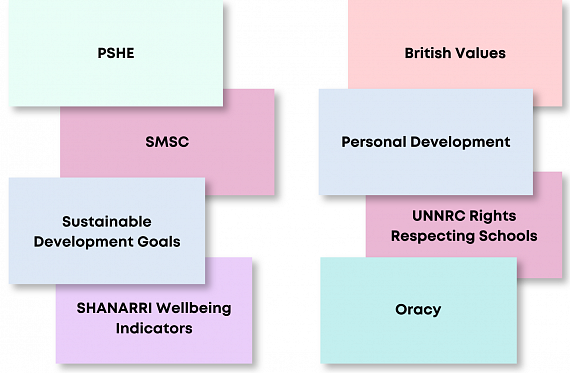
Personal Development is one of the hardest Ofsted judgements to evidence from a single subject. VotesforSchools maps to seven frameworks:
We also issue a termly overview report showing exactly what's been covered, with whom, and when. When a governor asks how you're tackling bullying and what evidence there is of improvement, the answer is already written down.
What Ofsted say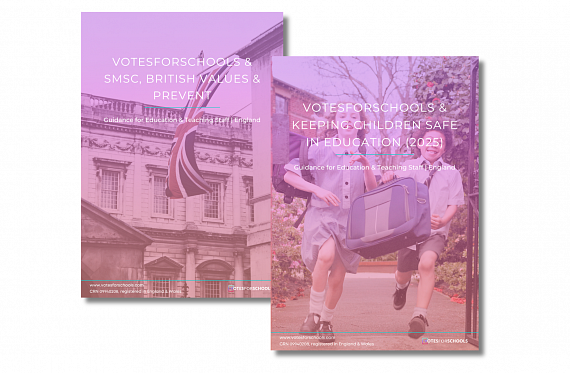
KCSIE compliance is ultimately an SLT and governor responsibility, whatever gets delegated day to day. Since February 2026, that list has grown by one: schools have a legal duty under the Children's Wellbeing and Schools Act to have regard to phone-free guidance, and Ofsted already inspects against it. VotesforSchools has never needed a personal device to run, so a phone-free classroom doesn't cost you a phone-free curriculum.
How we support KCSIE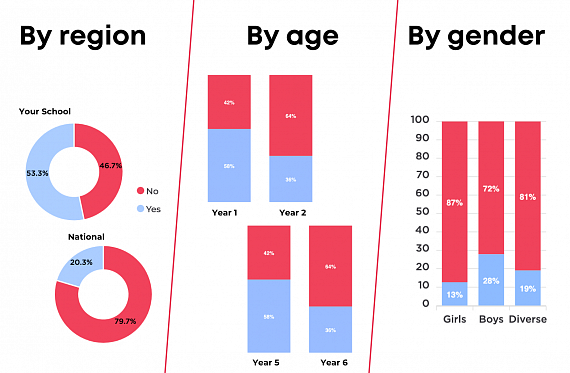
Every vote is broken down by year group and gender, and set against the national result. That's the difference between suspecting a problem and showing a governor the exact year group, the exact question, where your pupils diverge from the national picture, and what you did about it next.
How schools use data & reportingHeadteacher
Harden Primary School
Assistant Principal
Ninestiles
Headteacher
Worth Valley Primary
Headteacher
Walsall Wood Primary
Director of the Wider Curriculum
Dronfield Henry Fanshawe School
Assistant Principal
Reigate College
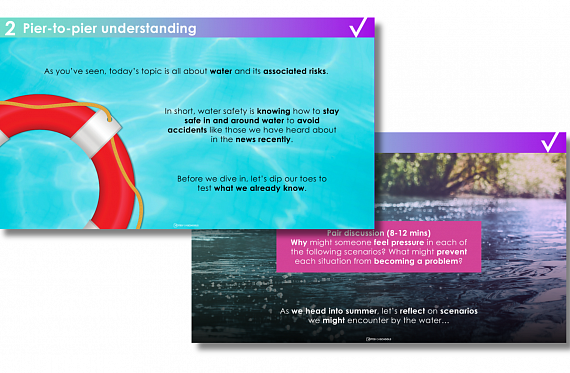
Every lesson arrives zero-prep with full context included, so a form tutor with no PSHE training can lead a confident discussion on a sensitive topic without a week of reading beforehand.
How we make our resources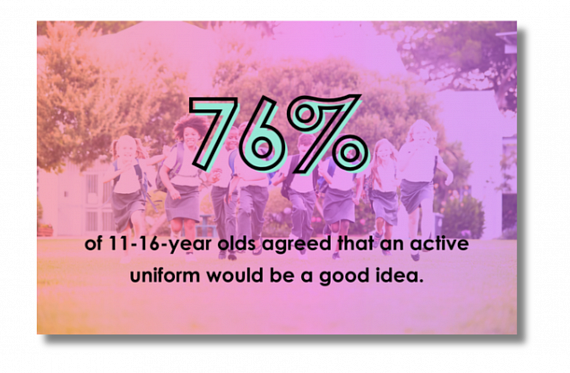
This year, one VoteTopic about school uniforms fed into a government committee report recommending more active uniform policies nationally. That's a different kind of claim to make to prospective parents or governors than most Personal Development pitches: not "we do good work," but a specific, checkable thing that happened because your pupils had a vote.
How we take pupil voice furtherIf you're looking for more detail, you can browse our policies and guidance documents below.
Every VoteTopic goes through the same process before it reaches a classroom: a real-world issue is chosen, a question is designed to allow balanced debate, the full range of views is considered (consulting outside experts where needed), age-appropriate activities are curated from reputable sources, voters are given room to reflect and reach their own conclusion, and the finished resource is checked for political bias in its text, imagery and overall trajectory. VotesforSchools always retains full editorial control and doesn't promote any political causes.
In practice, this is rare. For more sensitive topics like knife crime, schools get a minimum of two weeks' notice before the lesson goes out, so you can decide whether it's right for your pupils - and if it isn't, there are 200+ other lessons on the platform to run instead. For some of these topics, we also split the lesson into narrower age bands, a 5-8 pack and a 9-11 pack rather than the usual KS1 and KS2, so the content matches the room rather than the key stage.
RSHE lessons specifically are clearly marked and sit in their own area of the platform. If a parent objects to one of those, that sits with your school's own RSE withdrawal policy, exactly as it would with any other resource you use - VotesforSchools doesn't set or override it.
In the moment, that's your existing safeguarding policy and your staff's own training - we don't step in. Behind the scenes, every comment submitted is also reviewed weekly by our own team of qualified teachers. Comments are anonymous at pupil level but show the school name, so if something concerning comes up, we contact your school directly for your team to investigate.
Yes - pupil data is anonymised and never linked or traceable to an individual pupil. Our privacy policy sets out exactly what we collect (form group, gender, and any survey responses), why, and the legal basis for each.
VotesforSchools has never relied on pupils having access to devices to cast their votes. While pupils can log their votes using a class iPad and their own individual log ins, many teachers count their class votes on the spot and submit them. There are many ways to count a vote - from the simple hands up approach to your own class ballot box. See how our schools do it here.
Primary: yes - our lessons cover all of statutory RSHE, and you don't need to run a separate scheme alongside it.
Secondary: not yet - full statutory RSHE coverage is in development, and VotesforSchools currently sits alongside your existing RSHE scheme rather than replacing it.
Yes - schools have delivered VotesforSchools sessions as part of an actual Ofsted inspection, with excellent feedback every time. Some of our newest schools joined after their head, who also inspects for Ofsted, saw a session running during someone else's inspection and asked to bring it back to their own school.
Yes - your results are shown as graphs in your school's portal, filterable by year group and class, so you can screenshot exactly the comparison you need and drop it straight into a report. Alongside that, we publish a weekly national data report showing how schools across the country voted and which organisations we've shared those results with - worth reading in its own right, both to see how your school compares to the national trend and to see where your pupils' voice actually landed that week.
Yes! Several schools have used their VotesforSchools data as part of their UNICEF Rights Respecting Schools Award evidence, particularly around Article 12, the right to be heard
Yes - most schools start small and expand once they've seen how it runs, rather than committing whole-school from day one.
When you sign up, we send you introductory presentations for both your staff and pupils, explaining exactly how it works. We also offer free training whenever you need it via a video call, where we can talk you and your team through how the platform works.
The content is written to flex rather than be adapted afterwards - schools have used it successfully with EAL classes and with pupils rebuilding confidence after exclusion, and the vote itself works as a simple show of hands where the online portal isn't the right fit. We recommend you take a look at how our resources are made to understand why it works so well.
Every lesson arrives with full context included, so staff aren't starting from a blank page. Responsibility for handling a disclosure stays with your existing systems and staff training, whoever's in the room that week.
Honestly, for a lot of schools this replaces both, especially at Primary where we already cover all of statutory RSHE. School council exists to give pupils a voice in decisions, build leadership skills, and teach them how democracy works - VotesforSchools does all three, just grounded in real-world events rather than confined to school-only topics like non-uniform days. One group of pupils, after a lesson on single-use plastics, campaigned to get their school's ketchup sachets swapped for bottles. You can still run a school council alongside this if you want to - plenty of schools do - but the extra work you're worried about is largely already covered.
We offer discounted pricing for Multi-Academy Trusts, but the details depend on your trust's size and setup. The best next step is speaking to our team directly so they can quote for you specifically.