


Why Secondary Schools Choose VotesforSchools

Thousands of schools across the UK choose VotesforSchools to strengthen Personal Development for their pupils for its high-quality relevant resources, ability to meet multiple curriculum areas at ease and the way it fits into any school's timetable. Here's how we do it:
The same VoteTopic works wherever your timetable has room for it. Run it in tutor time when 20 minutes needs filling well, in PSHE where it slots into your existing scheme of work, or in assembly when you want a whole year group hearing the same question at once.
Whichever slot you use, nobody's improvising a debate on a sensitive topic with no lesson plan to hand, and nobody's writing three separate versions to cover three different contexts.
The lesson turns up ready to teach, whatever the timetable gives you.
How it works in Tutor Time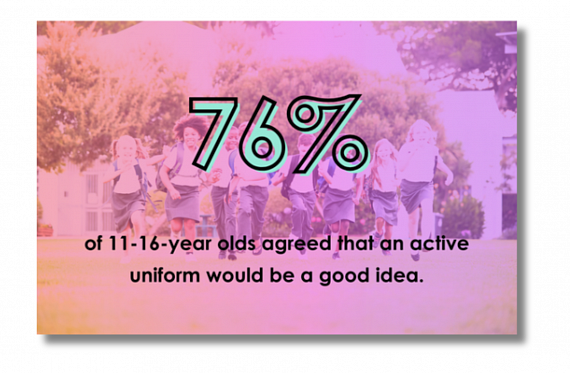
Every pupil in the school gets a say on that week's live topic, not just the handful elected to speak for everyone else on school council.
That voice doesn't stop at the classroom door. This year, one class's view on school uniforms fed into a government committee report, recommending more active uniform policies in schools nationally, and many of our secondary schools appeared on TV.
Improving Student Voice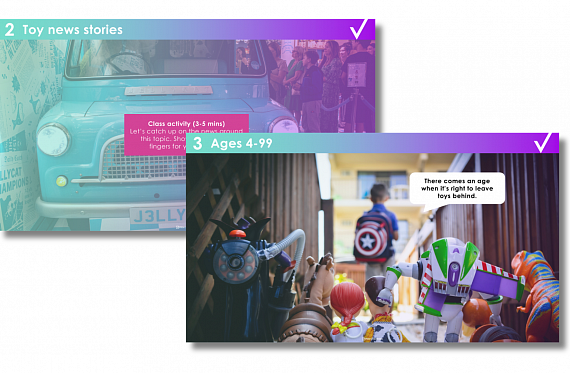
Every VoteTopic lesson gives pupils a live, topical question: listen to both sides, decide what they think, say so before they vote.
Our resources are built against the Oracy Framework from Voice 21 and the University of Cambridge - physical, linguistic, cognitive, social and emotional. Pupils practise finding the right words and responding to someone who disagrees with them, every week.
Developing oracy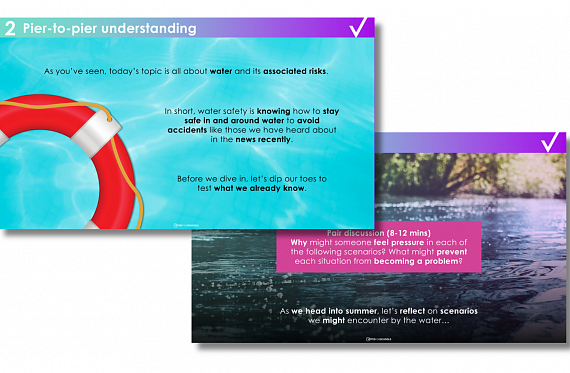
More than just a PSHE lesson: our resources also ensure you are meeting the criteria for SMSC, British Values, Prevent, Character Education, Protected characteristics, oracy and careers and econmic wellbeing.
More on curriculumExplore how VotesforSchools helps multiple staff meet the objectives in your school
VotesforSchools can be delivered during tutor time, assemblies, or as part of PSHE or Citizenship lessons. Some schools also have a dedicated VotesforSchools slot in their timetable.
We comprehensively cover many areas of Personal Development. You can find out exactly how we do it on the following pages:
We map each of our lessons to a variety of curriculum areas, and every single lesson comes with its very own curriculum map, showing what objectives were met in each lesson. As well as that, we'll send you half-termly and annual curriculum overviews showing you exactly how you've met each curriculum area.
We create the same lesson for multiple year groups intentionally: it means that the weekly topics are accessible to everyone, no matter their age or ability. All our lessons are rooted in the same topical premise, ethical dilemma or big question, no matter which lesson staff use across different classes. This means that every member of a school is discussing the same topic, which helps to build cohesion and encourage cross-class discussions, thereby supporting inclusion from the bottom up.
But, if you want to get technical, then there are also additional "challenge" or "extension" activities embedded in all the lessons to support those pupils who can stretch themselves further. Plus, the open-ended discussion questions we use throughout the lessons support conversations in mixed-ability groups, and we also include optional activities in the resources for those who might want to take the discussion further.
A full VotesforSchools school subscription includes:
Not at all! In fact, we don’t assume any prior knowledge for any of our VoteTopics. This means that the class teacher, support staff or, if appropriate for your school or class, students can deliver the content in a peer-to-peer session.
When a school subscribes, we set up a lead teacher to oversee VotesforSchools in your setting. You can have more than one lead teacher.
During term time, this teacher receives an email each Thursday at 4:00pm with the following week's resources. In addition to the lead, as many staff as needed can have a login to access the resources from our website from 4:00pm on a Friday afternoon.
There is a simple log in process and we provide clear, easy-to-follow guidance. Our helpline is available during school hours with friendly advice and help if you have any problems: info@votesforschools.com
Ensuring that the views of all children & young people are heard is central to the work of VotesforSchools. No student should be prevented from sharing their opinions or participating in decision-making, and we ensure that all aspects of the programme enable them to do this. Our resources and platform are inclusive by design, and accessibility is at the heart of our design practice.
Here are the three main ways we ensure accessibility:
1. We make all our lesson resources fully editable. Because the resources are produced in PowerPoint, staff are able to add or remove information, change images, or alter colours & patterns to suit students’ needs. After all, you know your class best.
2. We ensure that our resources are differentiated. This means that the weekly topics are accessible to everyone, no matter their age or ability. All our lessons are built on the same “hook”, from plastic pollution to elections to gaming. This means that every member of a school is discussing the same topic no matter which lesson staff use across different classes.
3. We use additional information boxes. Usually yellow in colour, these will either give further context to what is being discussed, or help define an unfamiliar word. This is intended to support all students, but is particularly helpful to those with SEND (as well as those with EAL).
In addition to these approaches, we believe inclusion and accessibility needs to go deeper. That's why we use imagery of children, young people & adults with visible disabilities across all our resources, and we focus on SEND-specific topics at various points in the academic year. People with disabilities are displayed positively, to help dispel any pre-existing stigmas or stereotypes that children & young people may hold, and we actively promote the benefits of improved understanding and awareness for everyone.
There are many different ways to log your class' votes - from a simple hands up exercise to a physical ballot box. How it works, and how you can bring it to life in your school is explained on our 'How does voting work?' page.
Typically, the class teacher takes a yes or no vote count from students at the end of a lesson and then uses our simple voting platform to submit the votes directly on the VotesforSchools website by selecting their class. Adding votes only takes a few moments and we have short, easy-to-follow videos on how to do this. Alternatively, a member of the team can demonstrate this during our free training sessions.
Every week our lessons invite young people around the UK to share their thoughts on a yes/no question. From climate change to the cost of living, AI to anti-racism, as many as 60,000 votes each week are submitted for 39 different VoteTopics across the year, along with a range of insightful comments that paint a clear picture of what the younger generation think and feel.
We then take young people's voices a step further, sharing their views and votes with key stakeholders and changemakers. The results of our weekly VoteTopics have made their way into national press, key policies, and Parliament! The impact that each and every one of our national votes has had is fed back to young people through weekly assemblies, so they feel empowered to make their voices heard in future lessons and beyond the classroom.
You can find out more about how we use the voting data on these pages:
When you sign up, we'll send you a welcome email with your very own VotesforSchools login details so that you get started straight away.
We'll also send you all of the information you may need to get your colleagues up & running with VotesforSchools, including an invitation to book a 30-minute training session, where we'll introduce the programme to all of your staff & show them how it works.
Try us for free, with our 14-day free trial. No card details, no commitment - just outstanding, ready-to-use resources
Start trial
Schools

Pupils

Votes