


Results & Impact
Each week hundreds of thousands of young people vote on our latest lesson. Here's what they say, and how their voices are changing the world.

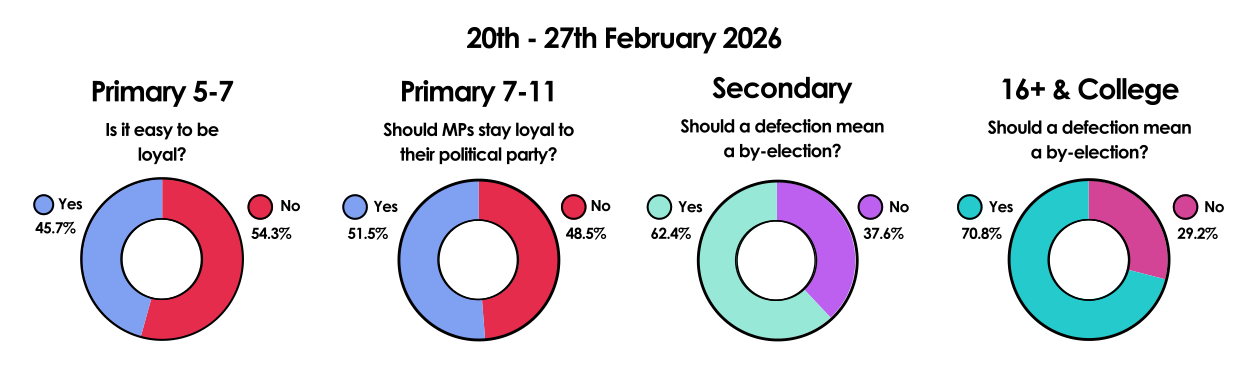
20th - 27th February 2026
Recent defections across UK political parties have triggered discussions around honouring voter choices at the ballot box. Namely, whether MPs have a duty to remain loyal to the party they won their seat with and if not, should “crossing the floor” lead to an automatic by-election? With the voting age being lowered to 16 at the next General Election, it’s more important than ever that young people have a voice in debates like these. They considered voter intentions, including whether party or candidate popularity has more influence over outcomes, as well as the struggle MPs face when they stop believing in the party or political leader they represent. Primary pupils discussed whether loyalty is part of an MP’s job description, while Secondary and College students debated what the implications of defection should be.
Secondary, 16+ & College voters were asked: “Should a defection mean a by-election?”, while Primary 7-11 voters discussed: “Should MPs stay loyal to their political party?” and Primary 5-7 voters considered, “Is it easy to be loyal?”
50,746 young people voted on this topic.

total votes

voters aged 5-11

voters aged 11-16+
You can see how our voting is impacting the world on our impact page:
Our Impact
06th - 13th February 2026
In a recent study, 81% of 11-16-year olds said they use AI chatbots, with almost one third of those who do saying they feel like the bot they use is one of their friends. Interestingly, a recent VotesforSchools vote, where close to 48,000 students took part, presented a different outcome; the same age group (11-16) recognised the dangers of parasocial relationships and didn’t believe they were the ‘new normal’. For Safer Internet Day, we wanted to delve deeper into the relationships young people are developing with chatbots, and so asked them to consider the extent to which they are willing to rely on AI for advice and the potential impact this could have on their wellbeing.
see results
30th January - 06th February 2026
As the Winter Olympics takes place across northern Italy this month, questions have been raised about the environmental and safety costs of hosting the games in unpredictable conditions. Increasingly, fake snow is being used to ensure the competition can go ahead, with organisers planning to use more than 3 million cubic yards of artificial snow to ensure surfaces are competition-ready. Critics have raised concerns about the immense amount of energy and water it takes to make and also the more dangerous conditions it can lead to for athletes, whilst advocates have praised it for its reliability, faster racing opportunities and ability to balance enough snow with clear weather conditions. We asked young people to weigh in on the debate and decide whether they think it should continue to be used in future Olympics.
see results
23rd - 30th January 2026
After Australia implemented a new social media ban for under-16s, the UK Government is considering doing the same. It is essential that young people’s opinions are included in the 3-month consultation, particularly as they will be the ones most affected by its introduction. At the end of January 2026, we asked our voters to debate the topic with their peers and decide whether they think it’s the best course of action to safeguard them against potential harm. Close to 70,000 young people between the ages of 5-16+ responded; this report explores the results of the vote, and adds vital context to the reasoning behind their results.
see results